
The demand for smaller, safer, and more efficient medical devices is pushing manufacturers to adopt highly advanced production technologies. Precision, reliability, and regulatory compliance are now the core requirements for medical components, especially in critical areas like minimally invasive surgery, diagnostics, and implantable devices.
Leading companies and medical device innovators are turning to medical micro injection molding and advanced injection molding for medical devices to meet these challenges, ensuring components are manufactured to exacting standards while scaling production efficiently.
Here are the top 5 technologies shaping the future of medical component production:
1. Medical Micro Injection Molding
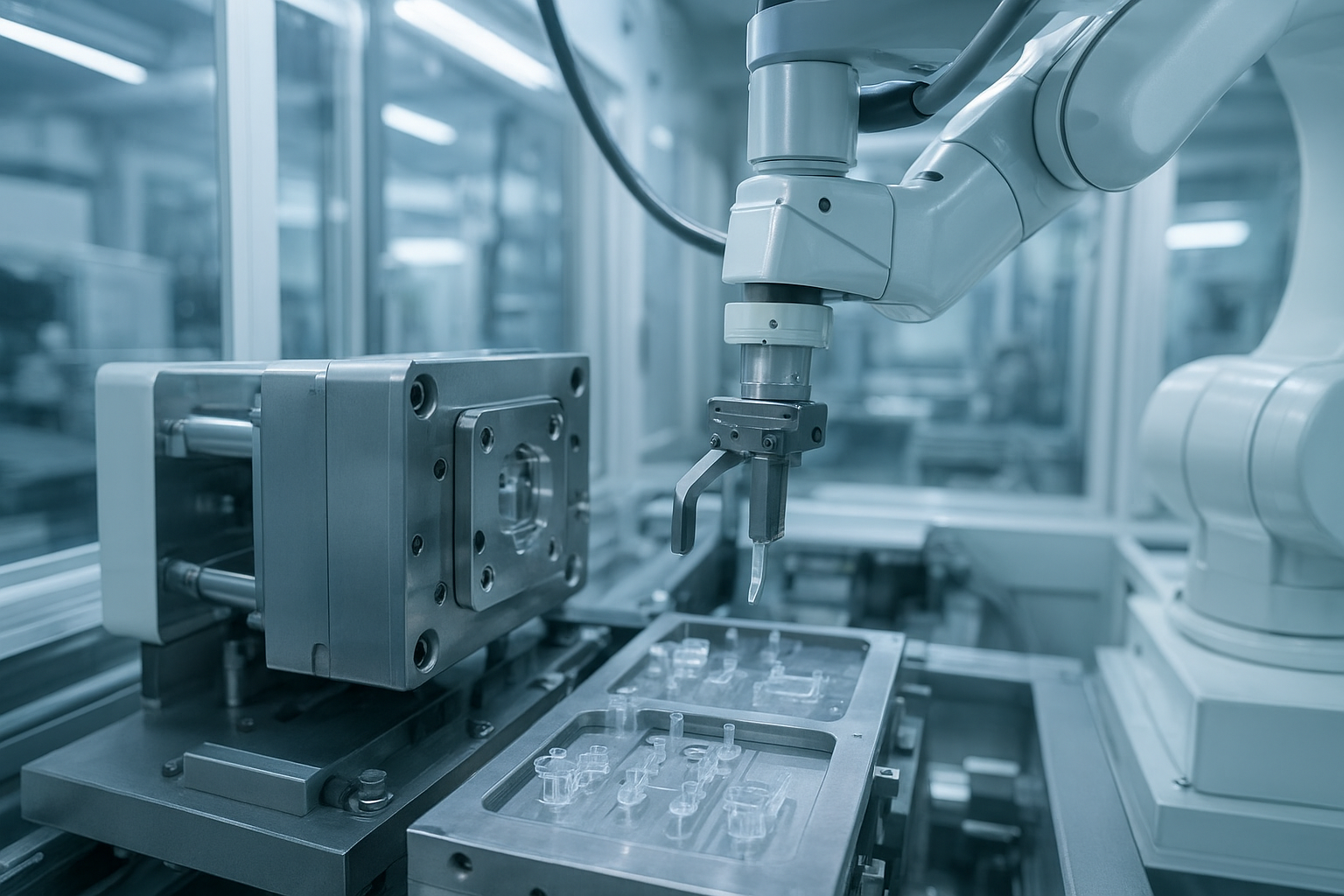
Medical micro injection molding allows manufacturers to produce components at microscopic precision, often with dimensions smaller than a few millimeters. This technology is critical for devices like insulin pumps, catheter tips, and hearing aid components.
Traditional machining methods struggle to achieve the required tolerances consistently, but micro injection molding enables repeatable precision, complex geometries, and the integration of electronic and mechanical functions into a single component. Manufacturers rely on medical micro injection molding to deliver parts that are both lightweight and highly reliable, meeting the stringent standards of ISO 13485 and FDA regulations.
2. Digital Twin and Smart Factory Integration
Digital twin technology enables manufacturers to create virtual models of the production process, allowing engineers to simulate and optimize parameters before physical runs. Coupled with smart factory systems, machines communicate real-time quality data, detecting deviations instantly.
This integration of automation, robotics, and real-time monitoring ensures consistent component quality. In injection molding for medical devices, even minor variations in temperature, pressure, or material viscosity can affect the final product, making these digital systems essential for maintaining precision and minimizing waste.
3. Advanced Biocompatible Polymers
Material innovation is at the heart of next-generation medical components. Polymers like PEEK, LCP, and bioresorbable materials provide the strength, flexibility, and sterilization resistance required for modern medical devices. Surface treatments such as plasma modification or nano-coatings enhance adhesion, reduce friction, and inhibit bacterial growth without altering part dimensions.
These advanced materials are widely used in components produced via medical micro injection molding or other precision molding processes, ensuring performance, patient safety, and compliance across a variety of applications.
4. Intelligent Molding Systems
Scaling production without sacrificing quality is one of the greatest challenges in medical component manufacturing. Intelligent molding systems integrate real-time monitoring and automatic adjustments to compensate for material shrinkage, tool wear, or process fluctuations. These systems enable manufacturers to produce high volumes of parts while maintaining tight dimensional tolerances.
From prototypes to full-scale production runs, smart molding systems ensure consistent quality in critical applications such as cardiology devices, ophthalmic tools, and minimally invasive surgical components, complementing traditional injection molding for medical devices techniques.
5. Advanced Metrology and Quality Control
Traditional inspection methods cannot adequately measure microscopic components. Advanced metrology, including non-contact optical measurement, 3D scanning, and automated defect detection, ensures that every part meets strict regulatory and safety standards.
Coupled with machine learning and process analytics, these quality control systems allow for real-time feedback and immediate corrections during production. For manufacturers pursuing FDA approval or ISO 13485 certification, such rigorous quality assurance is indispensable. High-precision inspection guarantees reliability, minimizes defects, and enhances the overall safety of medical devices.
Shaping the Future of Medical Component Manufacturing
As healthcare devices become smaller, smarter, and more connected, precision-driven technologies are essential. Medical micro injection molding and injection molding for medical devices are now central to producing reliable, high-performance components. By integrating digital twins, smart factories, advanced polymers, intelligent molding systems, and cutting-edge metrology, manufacturers can achieve both precision and scalability.
Looking ahead, hybrid manufacturing, energy-efficient production, and sustainable materials are expected to further transform the industry. Companies investing in these technologies will lead the next generation of medical device innovation, producing components that are not only precise and compliant but also lighter, smarter, and more sustainable. Through these advancements, healthcare providers will continue to deliver safer, more effective, and life-changing medical solutions worldwide.
Read More:
From Conductor to Insulation: What Sets High-Quality Cables Apart
How to Upgrade Your Diving Gear for a Better Underwater Experience